Chinese Users Find Little Money in ‘Selling’ Their Faces to AI
Users in China who “sold their faces,” or licensed their likenesses, for use in AI short dramas and livestreams months ago report receiving few or no requests for their use, and consequently almost no related income.
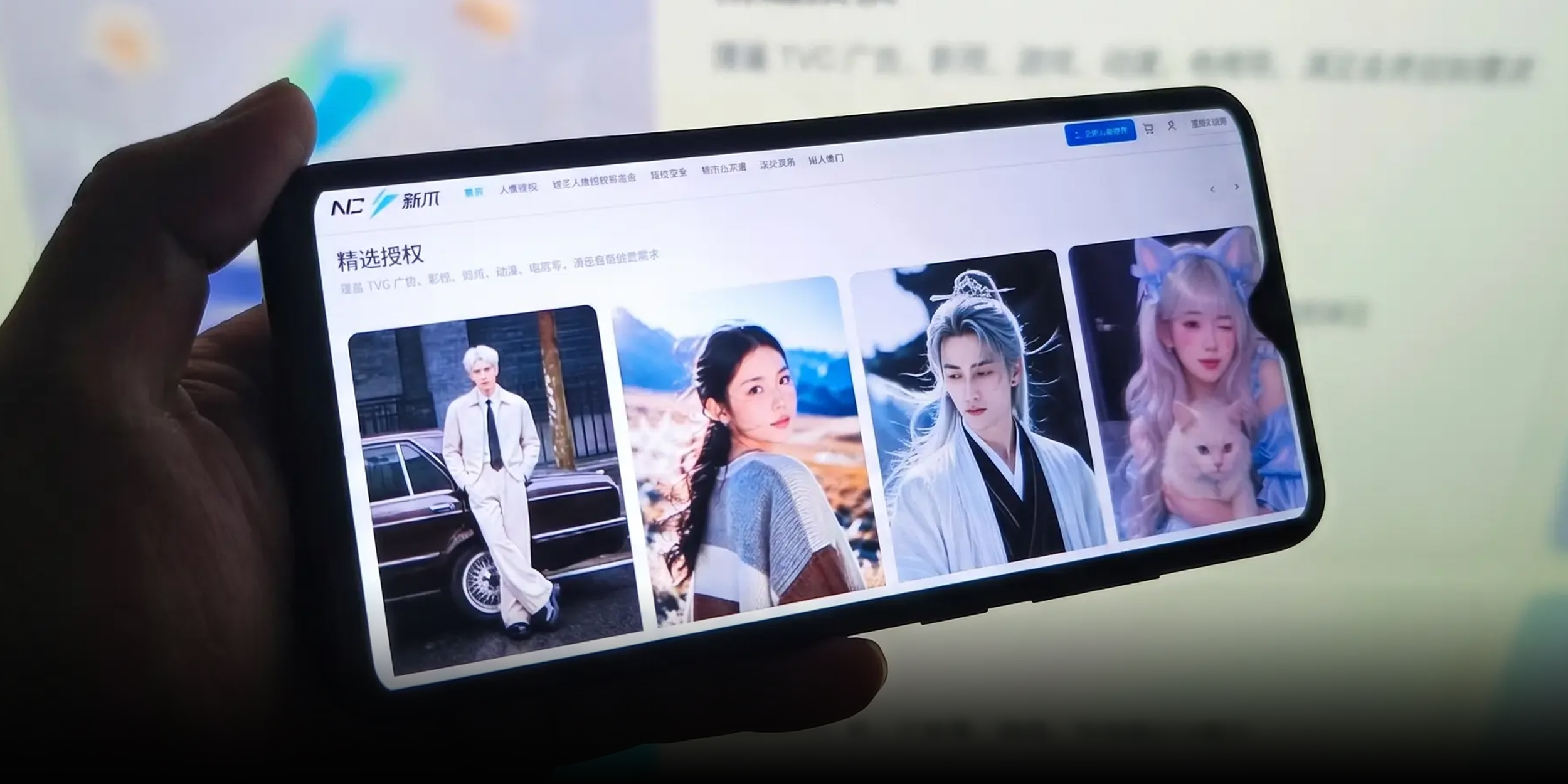
Domestic media outlet Southern Metropolis Daily reported Monday that many users on multiple domestic face-licensing platforms, such as NCAIGC, Mirafans, and ActID, which promise steady income and payment after use of a person’s likeness in their licensing agreements, have not received remuneration.
Face-licensing platforms first emerged around May this year, fueled by the growth of AI-generated content, particularly ultrashort dramas. At a September press conference held by the State Council Information Office, it was announced that more than 90% of the 430,000 ultrashort dramas released in China in the first eight months of 2026 were AI-generated.
The platforms attract users by advertising a low barrier to entry and high returns, with claims such as “earn nearly 2,500 yuan ($370) in three days with face selling” going viral on social media, state broadcaster CCTV reported Tuesday.
Face licensing lets individuals license their digital likenesses — otherwise protected from use by others under China’s Personal Information Protection Law — to a platform for use in AI ultrashort dramas and ads, among other content.
According to CCTV, registration on face-licensing platforms usually requires users to undergo real-name authentication, upload photos of themselves, and set a desired price for each use of their likeness. Some platforms also require users to specify which roles and scenarios they allow companies to use their likenesses for, such as villains, death scenes, or romance.
Buyers can select single-use or single-project authorization, and the licensor must accept within 24 hours, after which authorization documents are generated and materials released. Platforms take about a 30% cut.
Regular users can earn about 100 yuan per short video that uses their likeness, with some platforms setting a 500-yuan minimum, while professional actors may reportedly receive up to 10,000 yuan.
Wang Jinlin, a model based in the southern city of Guilin, licensed her face on ActID in May. If a buyer selects her portrait for commercial use, she says they’ll typically offer a one-time payment of 500 to 1,000 yuan. But so far, no studio has asked to use her likeness, she told Sixth Tone.
“There are probably few companies making AI live-action short videos right now — there’s no complete pipeline yet,” Wang said. She sees joining the platform as a way to protect her portrait: storing her portrait data should flag unauthorized use, and require any creator to apply for authorization through the platform before using her likeness.
That many report never receiving payments after licensing their faces could be because demand for non-celebrity likenesses is low. The head of AI production at a film and television company, surnamed Zheng, told CCTV that companies mainly seek celebrity and short-drama influencer likenesses, leaving little opportunity for regular people.
Liu Xiao, founder of ActID, told Southern Metropolis Daily that the platform ultimately provides users with an entry point to be seen and selected by buyers, rather than a contract that guarantees monetization.
Criminals may also steal others’ likenesses for AI use rather than go through official channels like face-licensing platforms. On Oct. 8, Beijing’s market regulator warned that lawbreakers tend to scrape selfies, videos, and voices from social platforms and use AI to generate avatars and clone voices from this material for commercial and livestream use.
“Many celebrities cannot fully guarantee their portrait and voice rights, let alone facial licensing in the AI field,” Zheng said. “It’s hard for ordinary people to define how large the gray area (of legal portrait use) is.”
Additional reporting: Xu Ruishuo; editor: Marianne Gunnarsson.
(Header image: An authorization page on face-licensing platform NCAIGC, Aug. 26, 2026. VCG)